Home › Structural Masonry and Block Walls
Superior Masonry Milwaukee constructs structural masonry and CMU block walls for commercial and industrial projects in Milwaukee, WI. We build load bearing, shear, and demising walls that meet engineering requirements and schedule demands. Our crews are experienced with rebar placement, grout pours, and embedded items to keep your structure solid and on track.
Superior Masonry Milwaukee provides professional structural masonry throughout Milwaukee, WI, Wisconsin and the surrounding area. Our licensed, insured crew delivers safe, clean, on-time work with a free estimate before anything begins. Call (854) 212-4473 or request your free quote.
Structural Masonry in Milwaukee: What It Really Means for Your Building
When we talk about structural masonry, we are talking about block or brick walls that actually carry the weight of your building, not just decorative facades. At Superior Masonry Milwaukee, we design and build walls that support floors, roofs, beams, and sometimes entire additions, which makes the planning and execution very different from simple veneer work.
In Milwaukee, most structural masonry for homes and light commercial buildings involves concrete masonry units (CMU), sometimes paired with brick or stone on the outside. The CMU takes the load. The brick or stone is mainly for appearance, insulation benefits, and durability. We work with architects and engineers to confirm wall thickness (typically 8 inch or 12 inch block for structural work in our climate), reinforcement spacing, and how the wall will tie into your existing structure.
Because of Wisconsin freeze and thaw cycles and lake effect moisture, structural masonry needs specific detailing. That includes proper footing depth below frost line, correctly sized control joints to handle expansion and contraction, and flashing and weeps to keep water from getting trapped inside the wall. Cutting corners here is what leads to cracked, bowing, or leaking walls a few years after construction. Our approach is to design for how Milwaukee weather will treat your wall 10 and 20 years from now, not just how it looks on day one.
How Structural Block Walls Are Built, Step by Step
A safe structural masonry wall starts long before the first block is laid. First we evaluate the site, soil conditions, and existing structure. For new construction or major additions, we usually work from stamped structural drawings. For smaller residential projects like garage support walls or load bearing basement walls, we can coordinate with a local engineer to confirm loads and reinforcement. Then we lay out the wall on the footing or slab so the block pattern works cleanly around openings, corners, and beam pockets.
Next is the foundation interface. Structural block walls should sit on a continuous concrete footing sized for the loads and local soil. In Milwaukee, that footing usually needs to be at least 48 inches below grade to be under the frost line. We install vertical rebar dowels in the footing that line up with the cores of the block. These dowels are what tie the wall and footing together so the wall does not slide or rotate over time.
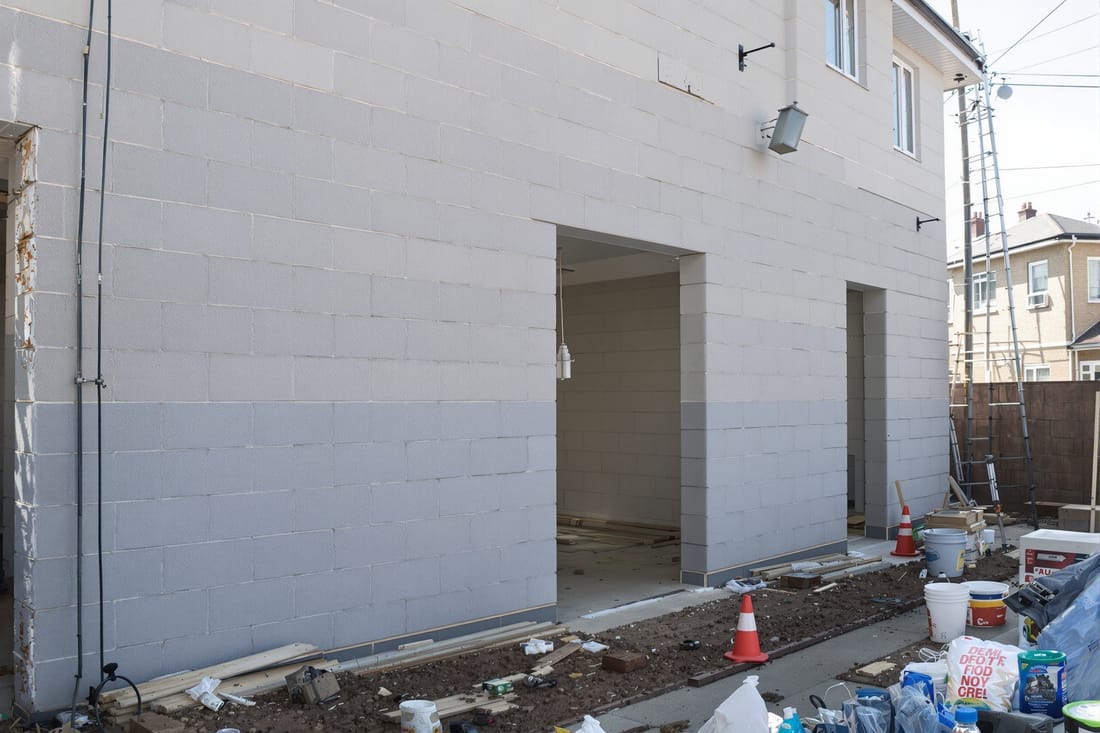
Once the footing is cured, we begin laying block. We start at corners and work toward the middle, constantly checking plumb, level, and alignment with a story pole and laser. Mortar joints are typically 3/8 inch thick. For structural masonry, every course is checked because any small deviation can compound and cause issues with window openings, door frames, or beam seats.
Reinforcement is what turns a simple stacked wall into a true structural system. Depending on the engineering, we place vertical rebar every 16 or 32 inches and horizontal ladder or truss reinforcement every one or two courses. After reaching certain heights, we grout the reinforced cells with high slump structural grout, which fills the cores and bonds everything together. In many cases, we also pour a solid bond beam at the top of the wall, which is a continuous reinforced course that distributes roof or floor loads evenly.
Openings for windows, doors, and garage doors are framed with lintels. These can be steel angle lintels, precast concrete lintels, or reinforced masonry bond beams formed in place. For heavier loads such as wide garage doors or commercial storefronts, we often integrate steel I-beams that bear on reinforced block piers. All of these details are handled during layout, so you do not end up with last minute field fixes that weaken the wall.
Material Options, Design Choices, and What Affects Cost
Structural masonry is not one size fits all. In Milwaukee, Superior Masonry Milwaukee typically installs three main wall types: standard gray CMU left exposed, CMU with brick or stone veneer, and insulated CMU systems. The best choice depends on whether the wall will be visible, how much insulation you want in the wall itself, and your budget.
Standard gray CMU is the most economical and is common for basements, garages, utility buildings, and interior load bearing walls. You can leave it exposed, paint it, or apply a coating. For any walls exposed to the weather, we recommend either a proper exterior finish or adding a veneer so the block itself is not your primary weather surface.
For finished exteriors, we often build a structural CMU backup wall with a brick or stone veneer tied to it using metal ties and an air space. The block provides strength, and the veneer gives a durable, attractive face. Design choices here include brick color and texture, stone type (natural or manufactured), and bond patterns. Each option affects labor. Complex patterns and mixed materials cost more than simple running bond brick.
Insulated CMU or walls with rigid insulation between block and veneer improve energy performance, which matters in our cold winters. These systems add cost up front but can reduce heating bills and make basements and lower levels more comfortable. We can walk you through R-value options and where the local building code in Milwaukee and Milwaukee County requires certain insulation levels.
From a cost standpoint, the major drivers are wall length and height, block thickness, level of reinforcement and grouting required, complexity of openings, and site access. A straight 40 foot garage wall with easy equipment access costs significantly less per foot than a tall, heavily reinforced wall with many windows in a tight city lot. Winter work may also increase costs because we have to use cold weather masonry procedures: heated enclosures, warm water in mortar, and protection blankets so the mortar and grout cure properly. When we prepare a quote, we spell out these factors so you understand what you are paying for.
Common Milwaukee Structural Masonry Issues and How We Fix Them
Older block and brick buildings around Milwaukee often show the same patterns of structural masonry problems: step cracking in mortar joints, walls bowing inward in basements, water seeping through below grade walls, and spalling where the face of the block or brick pops off due to freeze and thaw damage. Superior Masonry Milwaukee is frequently called to evaluate whether these are cosmetic or true structural concerns.
For cracking, we first determine whether the crack is from settlement, lateral pressure, or thermal movement. Hairline vertical cracks with no movement may just need repointing and monitoring. Stair-step cracks near corners, especially in basements, can indicate foundation movement or soil pressure from clay soils and poor drainage, which are common in older Milwaukee neighborhoods. In those cases, we may install new interior structural block walls with proper reinforcement, replace deteriorated sections, or work with an engineer to design bracing or anchors.
Bowing basement walls are a serious issue in parts of Milwaukee where groundwater and poorly draining backfill push against unreinforced block. Solutions range from carbon fiber straps for mild deflection to full wall replacement. When replacement is needed, we excavate outside, carefully support the structure above, remove the failed masonry, and rebuild a reinforced structural block wall with improved drainage and waterproofing. That waterproofing typically includes exterior membrane, drainage board, washed stone backfill, and a footing drain tied to a sump. The goal is to reduce water and pressure on the new wall so the same problem does not return.
Water infiltration through structural masonry is addressed with both exterior and interior measures. On the exterior we repair cracks, rebuild failed joints, install flashing at critical points such as window heads and sills, and sometimes add a veneer that sheds water more effectively. On the interior we may install parge coats, waterproof coatings, and new interior framing that respects the structural wall behind it. All of this is done without weakening the block that carries the load of your home or business.
Whenever we repair structural masonry, we document what we find with photos and notes. This can be helpful if you are working with your insurance, refinancing, or planning to sell the property and need to show that the structural work was done by a professional contractor with a clear scope and reasoning.
Planning, Permits, and the Best Time to Schedule Work in Milwaukee
Structural masonry and block wall projects in Milwaukee typically require permits, especially if the wall is load bearing, exterior, or part of a new addition. Superior Masonry Milwaukee can coordinate with your designer or engineer and help prepare the drawings and details needed for the City of Milwaukee or surrounding municipalities. For more complex projects, the building department may require stamped structural calculations, which we arrange through licensed local engineers.
During planning, we will talk about how the new structural masonry ties into your current structure. That includes temporary shoring if we are removing existing walls, adding new beams, or cutting larger openings into a block or brick wall. We lay out a clear sequence so you are not surprised when certain areas of your home or business are temporarily inaccessible.
The best time of year in Milwaukee for extensive block work is generally late spring through early fall. During this window, mortar and grout cure properly without significant added cost for winter protection. However, if your project cannot wait, we routinely work in colder months using heated enclosures, insulated blankets, and modified mortar mixes that meet cold weather masonry standards. The main tradeoff is budget, not quality.
Before hiring any structural masonry contractor, ask how they handle reinforcement details, cold weather work, and inspections. For permitted projects, the city or village usually requires one or more inspections to verify footing depth, rebar placement, and grouting. We schedule these inspections and walk the inspector through the project so the process stays smooth.
When you call Superior Masonry Milwaukee, we will start with a site visit to understand your goals: new load bearing walls for an addition, a stronger garage structure, basement wall replacement, or commercial block construction. We will then provide a written scope that explains wall type (thickness, reinforcement, veneer, and waterproofing), the sequence of work, estimated schedule, and how we will protect your property and neighbors while we build. That way you know exactly what is going into the structural masonry that is going to hold up your building for decades.